


A silk vs satin sleep mask comparison comes down to one simple fact: silk is a natural fiber, and satin is a weave - and that difference shows up in how each feels on your skin. According to the International Sericultural Commission, mulberry silk accounts for about 90 percent of global silk production, which is why it is the benchmark for real silk masks. This guide explains the difference, what to look for on a label, and why the choice matters for sleep.

What Is the Difference Between Silk and Satin?
Silk is a fiber produced by silkworms, while satin is a weave that can be made from silk, polyester, nylon, or rayon. A satin mask can even be made from silk - the two are not opposites. What most people call "satin sleep masks" are usually polyester, which is why they feel smooth at first but can trap heat and lose their finish quickly.
Is Satin Good Enough for a Sleep Mask?
Satin is better than plain cotton for a sleep mask, but it is not the same as silk. Polyester satin is smooth and inexpensive, yet it is less breathable, can feel warm overnight, and its synthetic fibers create more friction than real silk. If you are on a budget, a satin mask is a reasonable step up; if you want the gentlest option for your skin, silk wins on breathability, softness, and durability.
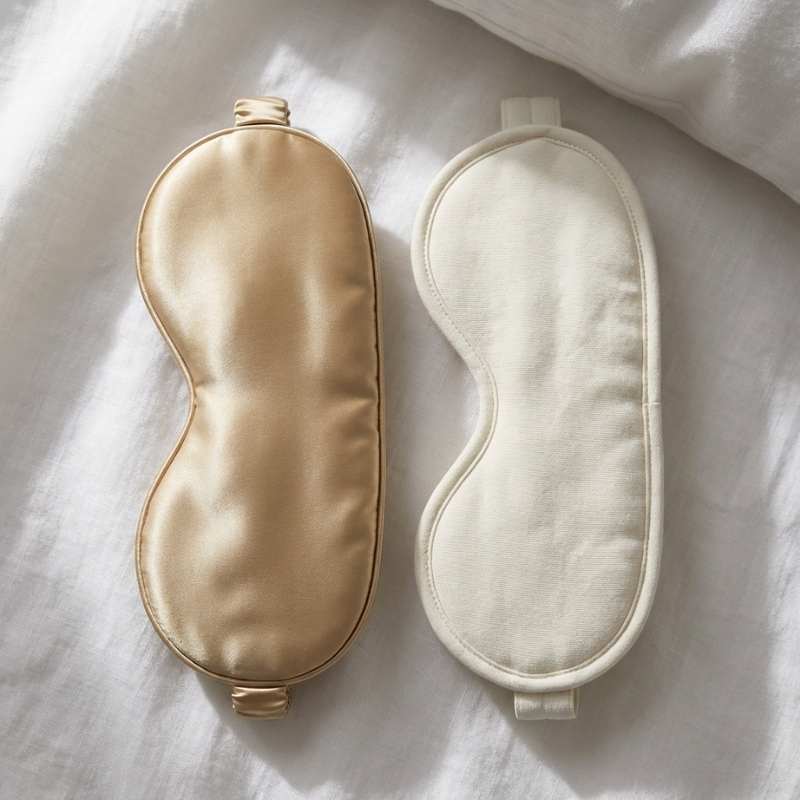
How Can You Tell Real Silk from Satin?
The label is the first clue: real silk is listed as "100% mulberry silk" or "100% silk," while satin masks usually say "satin" or list polyester. The burn test is definitive - silk burns slowly with a smell like burnt hair, while polyester melts - but you can also feel the difference: silk is soft and slightly warm to the touch, and it drapes naturally. Our guide to mulberry silk explains momme weight and how to check fabric quality.
Is Silk Worth the Higher Price?
For most people, yes. A silk mask costs more because the fiber is expensive to produce and because a well-made silk mask lasts longer - with care, ours keeps its shape and softness for one to two years of nightly use. Satin masks often look worn within months, which means replacing them more often. Over time, the cost per night of a quality silk sleep mask can be lower than replacing cheap satin masks repeatedly.

Satin Sleep Mask: What You Are Actually Buying
A satin sleep mask is a mask made from a weave, not from a fibre. Satin describes how the threads are woven - floats sitting on the surface, which is what gives it the shine and the glide - and it can be woven from silk, polyester, nylon or rayon. That matters, because the feel people like about satin is not the same thing as the fibre benefit people are looking for. A polyester satin mask will slide across your face, but it will also hold heat and hold on to the oils from your skin, which is the opposite of what you want against your eyes for eight hours.
A cotton sleep mask sits at the other end of the range. Cotton is breathable and washes well, but the fibres grip rather than glide, so the fabric creases against your face and absorbs your skincare instead of letting it sit. If you are choosing on comfort alone, look at the weave. If you are choosing on what happens to your skin overnight, look at the fibre.
Silk vs Cotton Sleep Mask: Which Is Better?
Cotton is soft but absorbent: it can pull moisture away from the skin, feels rougher against delicate skin, and holds onto oils and residue more easily than silk. Silk's smooth surface glides instead of dragging, which is gentler around the eye area and hair. A cotton mask is fine for occasional use, but for nightly wear most people find silk sleep masks more comfortable and easier to care for over time.
If you want to compare the full range of options before deciding, our best silk sleep mask guide covers the complete buying criteria.
Which Sleep Mask Should You Choose?
If you want the smoothest surface for your skin, the 22-momme mulberry silk sleep mask in black is the clearest upgrade from satin. If you prefer a lighter shade, the navy blue silk mask has the same 100% mulberry silk and contoured fit. You can browse the full silk sleep mask collection to compare colors, and our silk care guide explains how to keep either one in perfect condition. Creases are the one thing silk owners ask about most, and our guide to getting wrinkles out of silk covers the safe way to remove them.
Silk vs Satin: What Is the Actual Difference?
Satin is a weave. Silk is a fibre. That single sentence explains most of the confusion, and it is the difference that decides whether the fabric against your skin for eight hours is breathable and gentle or synthetic and warm. Satin describes how threads are woven to create a smooth, glossy surface - and that weave can use silk threads or polyester ones. Silk describes where the fibre came from. A fabric can be silk and satin at the same time; a fabric can also be satin and not silk at all, which is the case for almost every cheap "satin sleep mask."
In practice: if a product says "satin" and does not say "silk," assume polyester. If it says "silk satin," it is silk woven in a satin weave, which is exactly what our silk sleep mask collection uses.
Is Satin or Silk Better for Your Skin?
Silk wins on the details that matter overnight. Mulberry silk is a natural protein fibre that breathes, so it does not trap heat the way polyester satin does, and it holds its smooth surface after washing instead of pilling. Satin's advantage is price and looks - it photographs beautifully, which is why so much of it is sold as bedding. But the sheen fades as polyester satin wears, while silk stays smooth.
For a mask specifically, breathability matters more than for bedding, because the fabric sits directly over your eyes and nose. The honest version: good silk costs more, and it is worth it for something you wear every night. Skin is the other reason people make the switch, and our explainer on what beauty sleep means covers what your skin actually does overnight.
The Bottom Line
Silk is a fiber; satin is a weave. Real mulberry silk feels smoother, breathes better, and lasts longer than most satin masks, which is why it is the better choice for your skin and your sleep. If you are ready to switch, the silk sleep mask collection is a good place to start, and every order is covered by a 60-night guarantee.