


The best sleep mask for deep rest does one simple job — blocks light — but the fabric, fit, and design decide whether you will actually keep it on all night. The National Sleep Foundation recommends that adults get seven to nine hours of sleep per night, and for light-sensitive sleepers, a mask is one of the most reliable tools for protecting those hours. This guide covers what to look for in a sleep mask and how to pick the right one for your sleep style.

What Is a Sleep Mask?
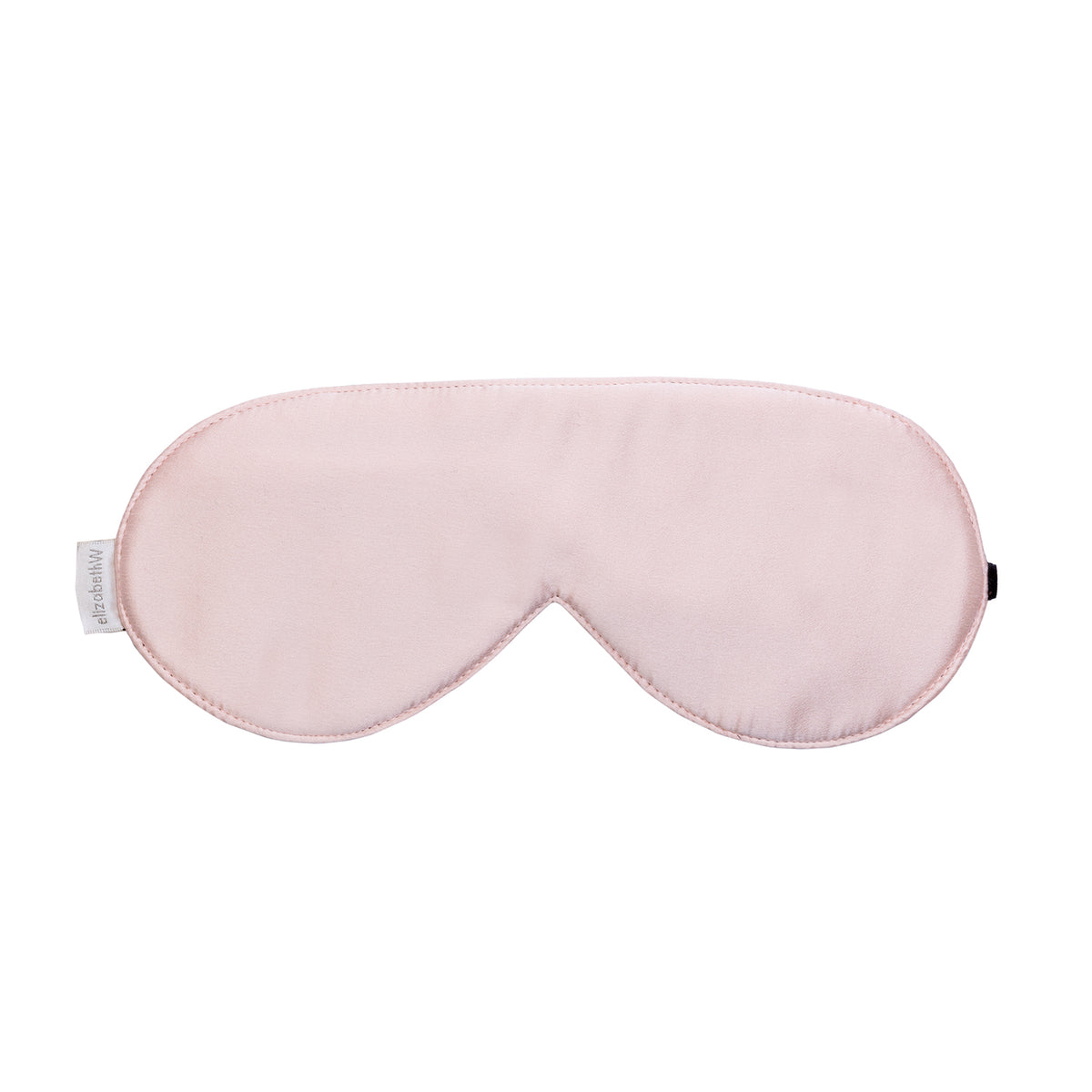
If you already know you want the mask rather than the explanation: our 22-momme mulberry silk sleep mask is 100% mulberry silk with a contoured fit, an adjustable band and a 60-night guarantee, and it is machine washable. You can compare the five colours in the silk sleep mask collection.
A sleep mask is a soft eye cover worn at night to block light. It is used by travelers, shift workers, people with light sleep, and anyone whose bedroom is not as dark as they would like. While the design varies — flat, contoured, silk, cotton, weighted — the job is always the same: keep light away from your eyes so darkness can do its work. The right design for you depends mostly on your sleep position and how much light bothers you.
Do Sleep Masks Actually Work?
Yes, for the most common sleep complaint: unwanted light. Darkness signals the brain to produce melatonin, and a well-fitted mask keeps your eyes in darkness even when your room is not perfectly black. The full evidence, and what masks cannot do, is in our sleep mask benefits guide.

What to Look For: Light Blocking, Fit, and Fabric
Three features separate a mask you wear every night from one that ends up in a drawer:
- Light blocking. A contoured nose bridge and wide coverage stop light from leaking in around the edges. This matters most for side sleepers and travelers.
- Fit. An adjustable, soft band holds the mask in place without pressing on your eyes or pulling your hair.
- Fabric. Silk is the most comfortable option for nightly wear — smooth, breathable, and gentle on skin. Cotton and satin can absorb moisture or trap heat.
Every mask in our silk sleep mask collection is built around these three priorities.
Silk vs Cotton vs Satin vs Weighted
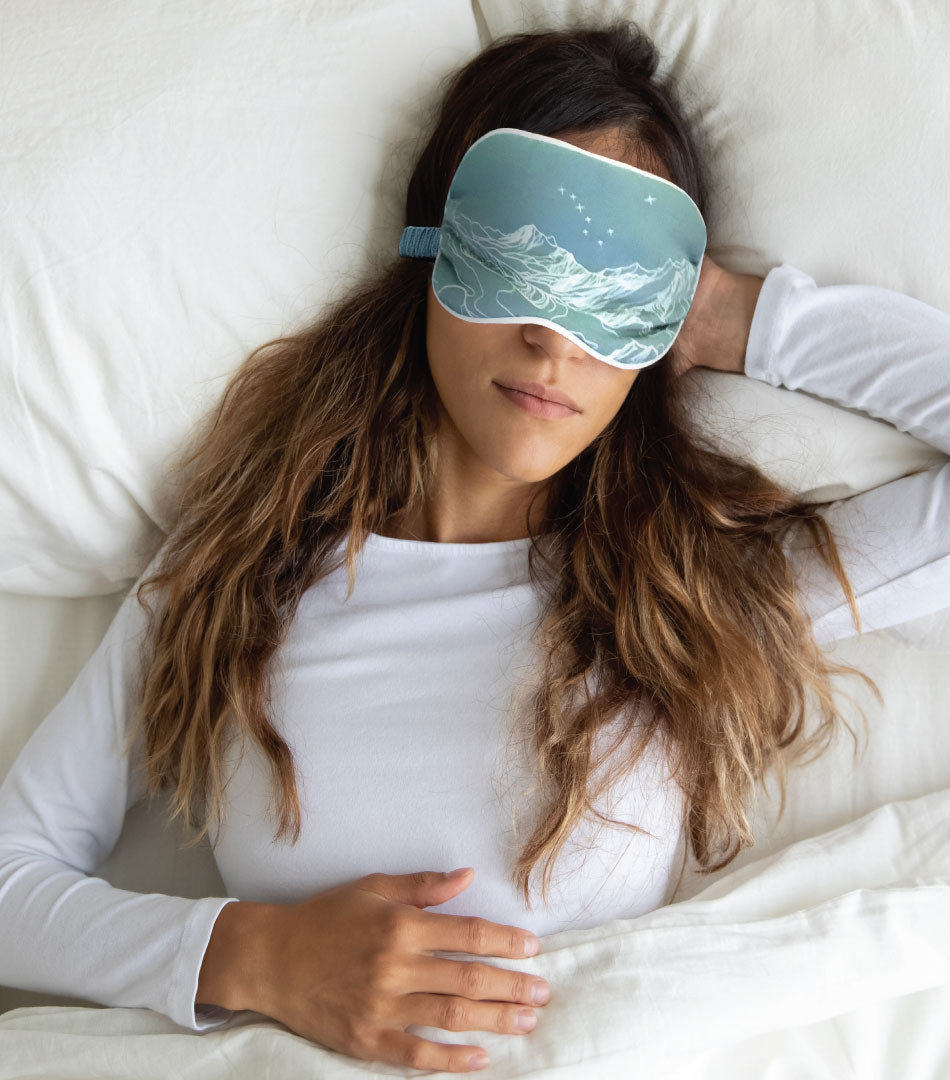
Fabric choice is the first decision. Cotton is cheap and breathable but can feel rough and absorb moisture. Satin looks silky but is usually synthetic and traps heat. Weighted masks add gentle pressure, which some sleepers love and others find heavy. Silk is the best balance for most people: naturally smooth, temperature-regulating, and durable — and it stays comfortable for the full night, not just the first hour. If you like the idea of gentle pressure, that is a personal preference — but for comfort and light blocking combined, silk is hard to beat.
How to Choose a Sleep Mask for Your Sleep Position
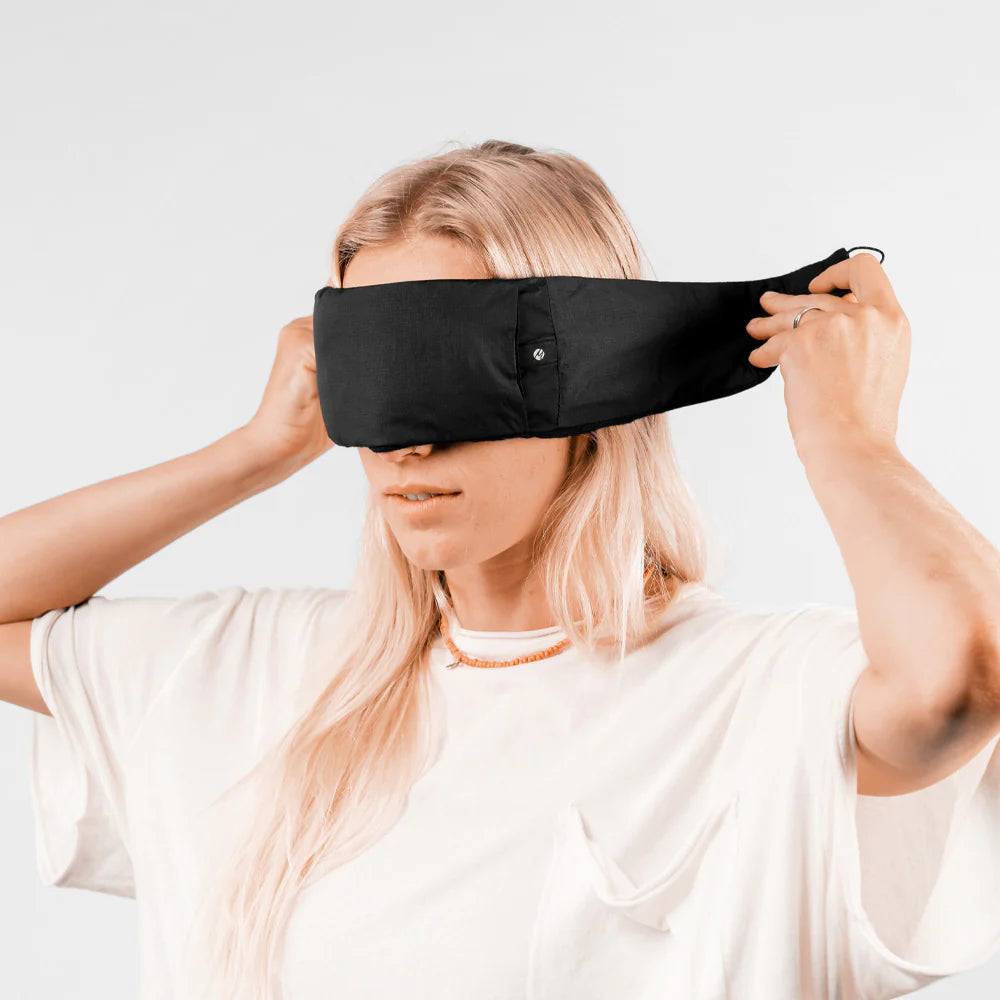
Back sleepers have the most freedom and can wear almost any mask. Side sleepers need a low-profile design that will not shift against the pillow, which we cover in our guide to sleep masks for side sleepers. Stomach sleepers should keep the mask as thin as possible to avoid pressure on the eyes.
The Best Sleep Mask for Most People
Our top recommendation is the 22-momme mulberry silk sleep mask in black. It combines a contoured light seal, an adjustable band, and 100% mulberry silk at 22 momme with a silk filling — soft, cool, and durable enough for nightly use. It is OEKO-TEX certified and backed by a 60-night guarantee, so you can test it without risk.
How to Wash Your Sleep Mask
Wash your mask every three to five wears. Hand wash in cold water with a pH-neutral detergent and lay flat to air dry. A gentle machine cycle with the mask inside a mesh bag also works on most care labels. Skip bleach, fabric softener, and the dryer, and the mask will keep its shape and softness for years.
The bottom line: the best sleep mask blocks light, fits comfortably, and uses a fabric you will actually want on your face every night. The navy silk sleep mask is a great place to start, and you can browse the full silk sleep mask collection for more colors. For more detail, our sleeping mask FAQ answers common questions, and our best sleep mask roundup compares the top options side by side.